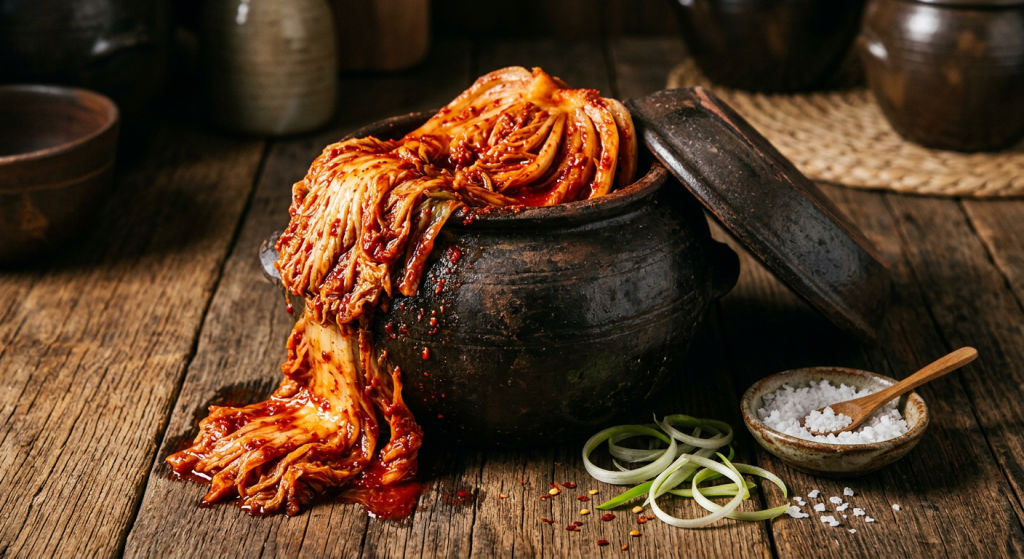
The real deal — traditional Korean baechu-kimchi made the proper way, with salted and rinsed napa cabbage, a deeply savory gochugaru paste built on fermented shrimp, fish sauce, garlic, and ginger, and plenty of scallions. It's tangy, funky, spicy, and crunchy right out of the jar, and only gets better as it ferments over the coming weeks. This is the kimchi you'll reach for with rice, eggs, noodles, stews, and everything in between.
Ingredients
1 large head (about 2 kg / 4.5 lbs) Napa Cabbage
6 tbsp salt
4 cups water
2 tbsp Glutinous Rice Flour
1 cup Water (For Porridge)
1 tsp sugar
5 tbsp gochugaru
8 cloves garlic, minced or grated
1 tbsp Ginger, peeled and grated
3 tbsp Fish Sauce
2 tbsp Saeujeot, roughly chopped
6 stalks chives, cut into 1-inch pieces
200 grams Daikon, peeled and julienned into matchsticks
Steps
Salt the Cabbage: Quarter the napa cabbage lengthwise through the core, then cut each quarter crosswise into roughly 2-inch pieces. Discard the very base of the core. Place the cabbage in a very large bowl. Dissolve the kosher salt in 4 cups of water, then pour over the cabbage. Toss well with your hands so every piece is coated. Let sit for 1 to 2 hours, tossing every 30 minutes, until the cabbage has wilted significantly and released a lot of liquid — it should feel limp and pliable, not crunchy.
Make the Rice Porridge Base: While the cabbage salts, whisk the sweet rice flour into 1 cup of cold water in a small saucepan until smooth. Set over medium heat and cook, stirring constantly, until the mixture thickens into a translucent, glossy porridge, about 3–4 minutes. Stir in the sugar. Remove from heat and let cool completely to room temperature. This porridge helps the paste cling to every leaf.
Build the Kimchi Paste: In a large bowl, combine the cooled rice porridge, gochugaru, minced garlic, grated ginger, fish sauce, and chopped saeujeot. Stir everything together until a thick, deeply red, fragrant paste forms. Taste it — it should be intensely savory, spicy, and a little funky. Adjust with a touch more fish sauce for salt or more gochugaru for heat.
Rinse and Drain the Cabbage: Drain the salted cabbage into a colander and rinse thoroughly under cold running water 2–3 times to remove excess salt. Taste a piece — it should be pleasantly salty but not overwhelmingly so. Squeeze handfuls of cabbage firmly to remove as much water as possible, then spread on a clean kitchen towel or paper towels and pat dry. Excess water will dilute your paste and slow fermentation.
Mix the Kimchi: Add the drained cabbage, julienned daikon, and scallion pieces to the bowl with the kimchi paste. Using clean hands (wear disposable gloves — gochugaru stains), toss and massage everything together until every piece of cabbage is thoroughly coated in the red paste. Work the paste into the leaves, not just over the surface. Taste and adjust: more fish sauce for depth, more gochugaru for heat.
Pack and Ferment: Pack the kimchi tightly into one large (2-quart) or two smaller clean glass jars, pressing down firmly after each handful so the vegetables are submerged under their own liquid and there are no air pockets. Leave at least 1 inch of headspace at the top — the kimchi will expand as it ferments and release gas. Seal the lids. Leave the jars at room temperature (ideally 65–72°F / 18–22°C) for 1 to 2 days to begin fermentation. You'll know it's working when you open the lid and see small bubbles and smell a pleasantly sour, tangy aroma. Taste daily — once it reaches a tang you love, transfer to the refrigerator. It's delicious fresh (geotjeori style), bright and crunchy after 1–2 days, and deeply complex and funky after 1–2 weeks.
Makes
2 quarts Napa Cabbage Kimchi
Reviews
Be the first to review
Cooked this? Rate it above and leave a note — your review helps the next cook.